The GLP-1 Closet Reset
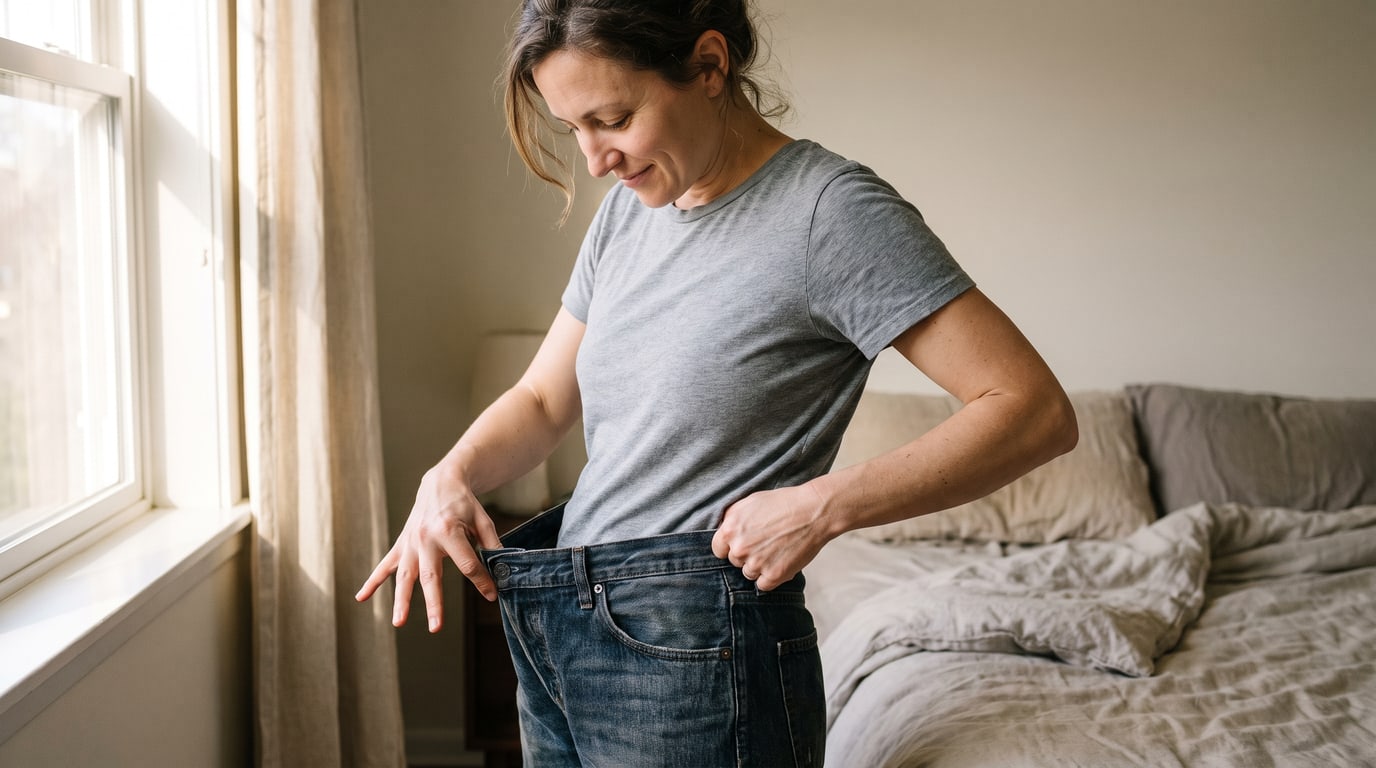
Losing weight on a GLP-1 medication does more than move the number on the scale. It changes what fits, upends everyday shopping habits, and shifts how people see themselves in the mirror. In a new survey, 73% of GLP-1 users said they sometimes picture a different body than the one looking back at them, a sign of how quickly the outside can outrun the inside.
Trimi surveyed 737 U.S. adults who currently use, previously used, or are on a maintenance dose of a GLP-1 medication to learn how treatment changes the everyday act of getting dressed. Our data found a wardrobe caught between two bodies, from stalled purchases and serial returns to a full rebuild of what people wear and where they buy it.
Key Takeaways
- More than half of GLP-1 users (55%) have started buying from brands they never shopped before treatment.
- Old Navy (10%), American Eagle (10%), and Amazon (9%) are the top new brands GLP-1 users have adopted since starting treatment.
- 4 in 5 GLP-1 users (80%) are living in clothes that no longer fit, waiting an average of 6 months before buying anything new.
- Jeans are the first casualty of weight loss, with 90% calling denim disrupted, and 42% saying theirs are now completely unwearable, the most of any category.
- Free People is the biggest gainer among the brands measured, doubling from 5% to 10% of shoppers, as 27% trade up to a contemporary, premium, or athleisure brand they never shopped before.
- GLP-1 users have spent an average of $328 rebuilding their wardrobe since starting treatment.
Dressing for a Body That’s Changing
For a lot of GLP-1 users, one of the hardest parts of losing weight is deciding what to wear while their body keeps changing.
Here is what life in the in-between looked like:
- 4 in 5 GLP-1 users (80%) have deliberately delayed or stopped buying new clothes until their body stops changing, waiting an average of 6 months.
- 90% of users called denim the most disrupted part of their wardrobe, and 42% said their jeans are now completely unwearable, more than any other category.
- Rebuilding a wardrobe has not been cheap. Users have spent an average of $328 (median $300) replacing clothes that keep getting too big.
- 67% have stopped buying the clothes they used to hide behind, 55% have ordered multiple sizes at once to catch a moving target, and 44% have returned or exchanged items often because their body outpaced the order.
As for the clothes that no longer fit, users handled the old wardrobe in a few different ways:
- Donated them (69%)
- Stored them just in case (54%)
- Threw them away (46%)
- Kept a favorite piece (44%)
- Resold them (28%)
Where GLP-1 Users Are Shopping Now
Weight loss is also redrawing the map of where people spend their money.
Our data pointed to a clear shift in loyalties:
- More than half of GLP-1 users (55%) have started buying from brands they never shopped before treatment.
- Plus-size retailers took the biggest hit, with Lane Bryant falling from 18% to 5% of shoppers and Torrid from 17% to 6%, the two steepest drops out of all brands.
- Free People was the biggest gainer among the brands measured, doubling its share of GLP-1 shoppers from 5% to 10%, as 27% of users traded up to a contemporary, premium, or athleisure brand they had never shopped before.
- 62% of users say they can now fit into stores they once avoided or felt shut out of.
- The most common genuinely new brands users have adopted are Old Navy (10%), American Eagle (10%), and Amazon (9%).
New Compliments, Complicated Feelings
Beyond the logistics, GLP-1 users described a shift in how they see themselves.
Our data captured the emotional side of the reset:
- Nearly 3 in 4 GLP-1 users (73%) said they sometimes picture a different body than the one in the mirror, including 78% of women and 59% of men.
- 51% of users say what they wear matters more than ever now that they have options, outpacing the 35% who feel their body itself now carries the look.
- 70% say they get more style compliments since losing weight, and 40% say it has changed how they dress.
- Many are holding on to the past: 42% kept a garment from their “before” body they cannot bring themselves to give away, and among them, 48% cited fear of needing it again, ahead of sentimental reasons (31%) and pride (20%).
- 89% of users said they wore baggy or oversized clothing mainly to hide their body before treatment. Among them, 56% are now shedding that look, while 19% are keeping it by choice.
- The reset comes with mixed feelings: 38% said they feel a sense of loss or waste over the wardrobe they invested in, even as 44% now pay more for clothing because they like how they look.
Methodology
Trimi surveyed 737 U.S. adults who currently use, previously used, or are on a maintenance dose of a GLP-1 medication. The survey was fielded online in June 2026 via CloudResearch Connect and Prolific, and respondents were screened to confirm GLP-1 use.
Of the 737 respondents, 66% were currently using a GLP-1 medication, 26% had used one previously and stopped, and 7% were on a maintenance dose. By generation, respondents were 46% millennials, 30% Gen X, 15% Gen Z, and 8% baby boomers. Ages were grouped into generations: Gen Z (18 to 29), millennials (30 to 45), Gen X (46 to 61), and baby boomers (62 and older). By gender, 75% were women, 25% were men, and 1% were non-binary.
Numeric responses, such as spend and months waited, are averages after removing outliers using the interquartile range method. Multiple-answer questions are reported as a percentage of respondents. Some questions were shown only to relevant respondents, so their bases are smaller by design. Percentages are rounded to whole numbers and may not total 100.
Findings reflect self-reported behavior from a non-probability online sample, so they describe the people surveyed rather than all GLP-1 users. The sample skewed female and higher-income, which may shape spending and brand findings.
Medical Disclaimer
This content is for informational purposes only and does not constitute medical advice. Always consult a qualified healthcare provider before starting, adjusting, or discontinuing any medication. Individual results vary. GLP-1 medications require a prescription and should only be used under medical supervision.
About Trimi
Trimi is a U.S. telehealth provider that connects patients with licensed providers and named 503A compounding pharmacies for GLP-1 treatment, including compounded semaglutide and compounded tirzepatide, with transparent all-in pricing and no membership fees. That vantage point gives the company a close view of the cost, access, and everyday decisions behind the GLP-1 conversation. (Trimi, at trytrimi.com, is a separate company from the similarly named TrimRx.)
Fair Use Statement
Feel free to share the findings from this study for any noncommercial use. We only ask that you link back to the full study so readers can see the complete results and methodology, and please credit Trimi as the source.